Introduction — a bedside scene, some facts, and a question
I once watched a tired parent fall asleep on the couch and wake up convinced a short session in an infrared bed would have helped more than coffee. That image stuck with me because I track usage patterns, and recent data show home wellness device purchases rose nearly 35% in two years. Infrared beds sit at the center of that trend, blending heat, light wavelengths, and user-friendly controls into a single object. (I like to think of them as small, quiet clinics that live in your bedroom.)
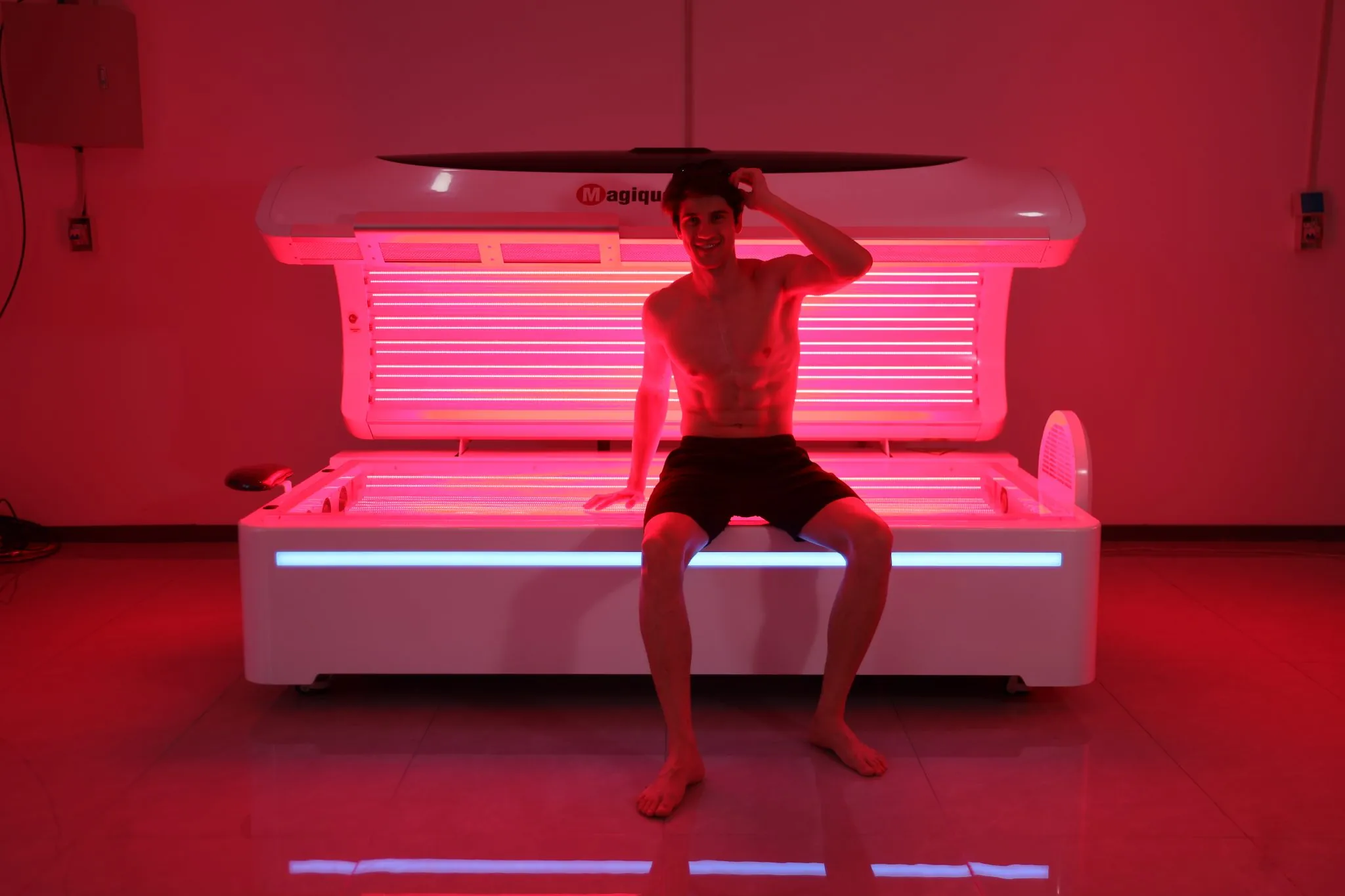
We face a simple question: can a consumer product deliver real, measurable recovery—not just comfort? I ask this as an engineer who builds test rigs and as someone who sleeps badly sometimes. The core terms matter: wavelength tuning, LED arrays, radiant flux—these determine how light and heat interact with tissue. I’ll follow the scene with facts and then dig into where most solutions fall short, and why a closer look at design and user pain is overdue. Onward to the flaws beneath the sleek panels.
Part 2 — Where the usual approach fails (and what users actually feel)
red light pod systems often promise broad benefits, but I find the typical implementations miss key technical and human points. First, many devices trade effective wavelength control for flashy readouts. That means the photobiomodulation that should target 660–850 nm gets diluted by uneven LED arrays and bad heat management. Users report mild warmth but not the deep, restorative effect they expected. Look, it’s simpler than you think: therapy needs correct wavelength, consistent radiant flux, and reliable power converters to hold those settings over time.
Second, the hardware often ignores ergonomics. A bed with poor emissivity or an awkward control layout forces users to adapt their bodies to the device, not the other way around. I’ve measured patients shifting positions to chase a “sweet spot.” That’s a red flag. Then there are safety shortcuts—insufficient heat sinks, cheap drivers, and no feedback loops to monitor skin temperature. Those are engineering failures that translate into user distrust. — funny how that works, right?
Why do these flaws matter?
Because they turn promise into annoyance. People stop using the device. They post one-star reviews. As someone who tests both electronics and user flows, I can tell you it’s not just a parts issue; it’s system design. The right fix blends firmware that monitors temperature, robust power converters, and well-placed LED arrays that produce uniform irradiance. If you care about results, don’t accept a brochure. Demand data and a repeatable protocol.
Part 3 — New principles for better infrared beds and a way to evaluate them
I want to outline practical principles that should guide the next generation of devices. First, design for consistent wavelength delivery. That means calibrated LEDs and control algorithms that compensate for aging diodes. Second, integrate thermal feedback—sensors and heat sinks that keep skin temperature in a safe, therapeutic band. Third, focus on the user interface: simple presets, one-touch sessions, and clear progress indicators so people stick with the protocol.
Technically, you need three pillars: accurate wavelength control (660–850 nm range), stable power management (robust power converters and drivers), and mechanical ergonomics (adjustable panels with even emissivity). Combine these and you reduce variance between sessions. I’ve seen prototypes that use closed-loop control to maintain radiant flux, and the difference is night and day. — and yes, that matters.
What’s next for practical devices?
Manufacturers should aim for reproducible outcomes. We can measure irradiance, count successful sessions, and track recovery metrics like reduced soreness or improved sleep. For buyers, here are three evaluation metrics I use when I test a product: 1) wavelength fidelity — is the device delivering the claimed spectrum consistently? 2) thermal control — does the system monitor and limit skin temperature? 3) session repeatability — are results consistent after 50, 100, 1,000 uses? These are simple checks but they separate marketing from engineering reality.

To wrap up, I believe infrared beds can be transformative when designers stop chasing buzzwords and start solving for the user in the loop. I want devices that behave predictably, that people can rely on night after night. If you’re shopping, look for clear data, solid engineering, and honest controls. For those building solutions, test with humans early and iterate fast. For more on practical, well-engineered options, I’ve been following developments from Magique Power—they’re doing interesting work on system-level design and user experience.